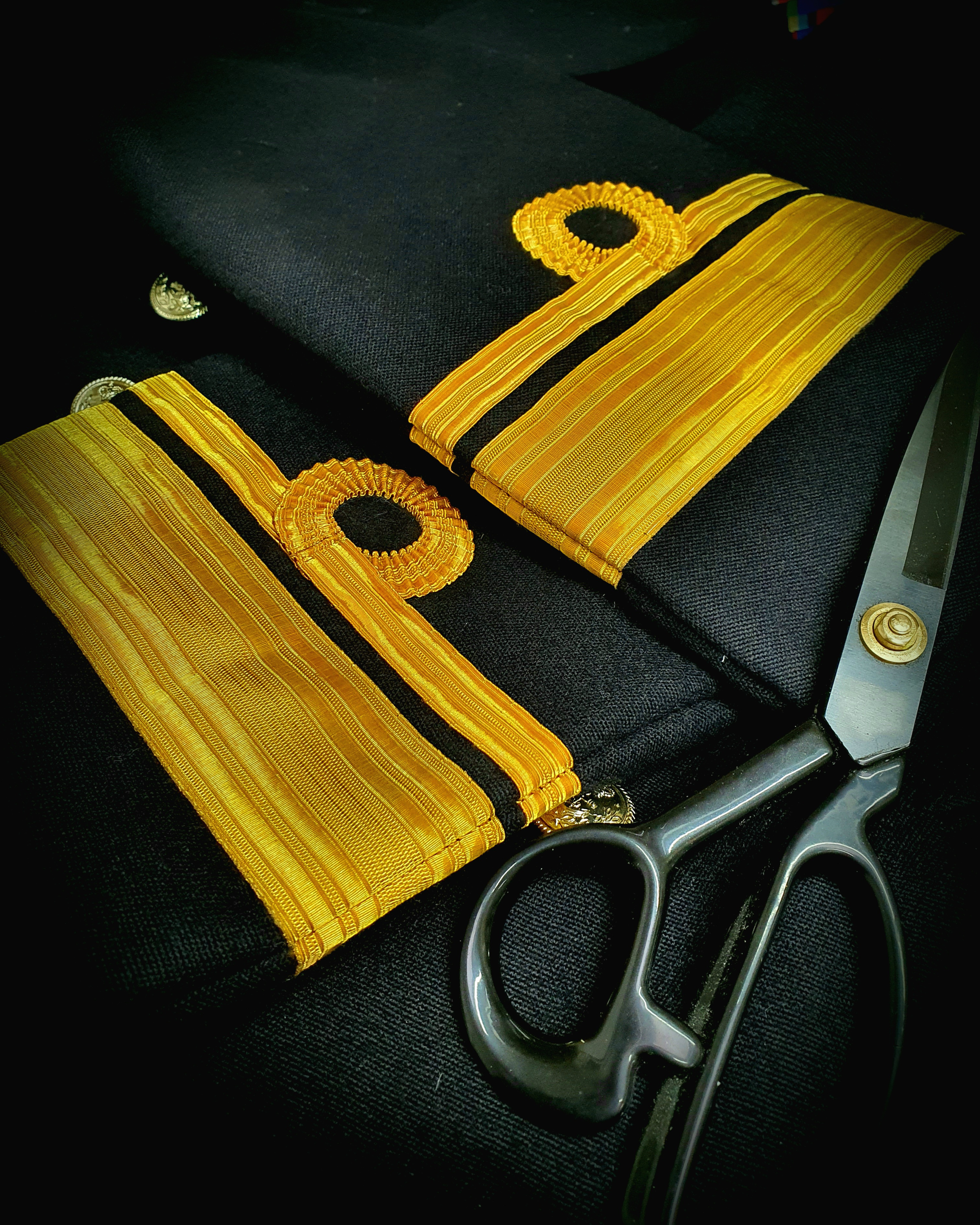
Promoted? What needs to be changed on a Royal Navy officer's uniform?
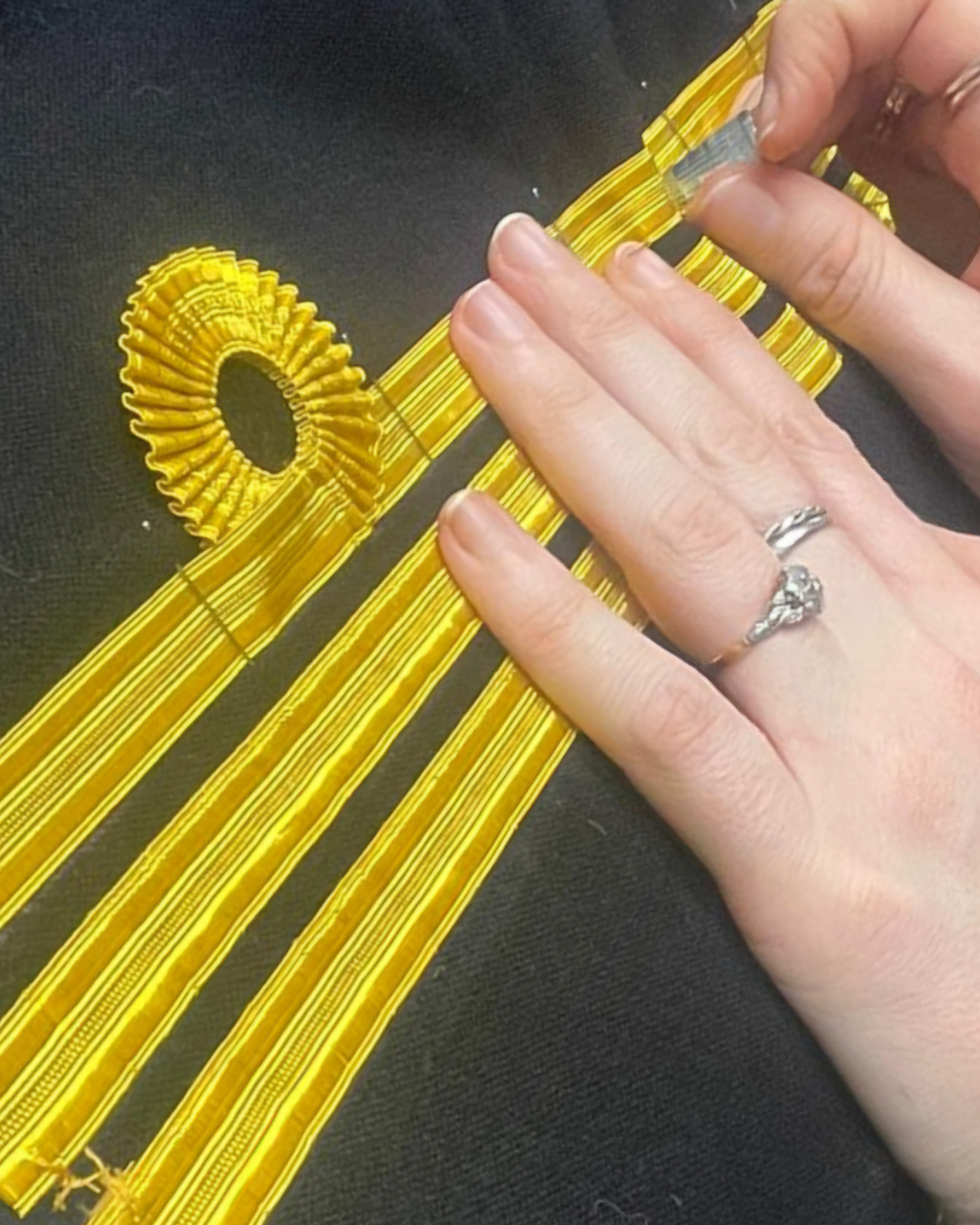
Getting promoted is always good news, but then comes the job of getting your uniforms ready for your new rank. Striping up can look as simple as adding another piece of gold lace to a sleeve, but there is considerably more involved if it is going to be done properly, particularly if the uniform has been worn for several years since it was last altered or striped.
For this article I'm concentrating specifically on Royal Navy officers and what we look at when someone brings their uniforms to us following a promotion. We'll cover promotions for other ranks and services in future Workshop Wisdom articles, as the uniforms, requirements and work involved are very different.
The first thing we check isn't actually the lace, it's the fit of the uniform. We look at how the jacket is sitting, whether it has become tight across the shoulders and whether the sleeves are still the correct length, because there is little point spending money having a jacket beautifully striped to your new rank if it no longer fits properly. Bodies change, so a jacket which fitted perfectly at your last promotion may need some adjustment by the time the next one comes around, and wherever possible we would rather alter and maintain a good quality existing uniform than tell somebody they need to replace it.
If we find anything during the fitting, we'll talk it through with you before we start. Any alterations needed to the body of the jacket can then be dealt with as part of the work rather than discovering after the new rank has gone on that the jacket itself doesn't fit as it should.
Why do we replace all the gold lace?
One of the questions we are quite reasonably asked is why we replace all of the rank lace when some of the existing lace may still look perfectly good. When we stripe a uniform to a new rank, we remove all of the existing rank lace and start again rather than simply adding the additional stripe alongside what is already there.
Gold lace changes as it ages and tarnishes, and although new lace can appear to match the existing stripes when it is first fitted, the two have already had very different lives. The older lace will continue to tarnish at a different rate to the new, which can mean that a few months later some of the stripes begin to look noticeably darker than the others. We don't consider that an acceptable finish, so starting again with new lace means that all of the stripes are the same age and should continue to tarnish at the same rate, rather than simply looking matched on the day they leave the workshop.
All of the curls we use are handmade and made to the correct regulation size, with a 45mm diameter for Royal Navy officer ranks and 50mm for Admiral ranks, while Commodores wear a 45mm circle. These might seem like relatively small details, but getting them right is simply part of striping a uniform correctly.
What else might need changing?
A promotion can involve considerably more than the rank on the sleeves, so while we have you and the uniforms with us we'll look at what else may need updating for the new rank or appointment. Someone being promoted to Commodore or above will need Flag Officer buttons, while somebody taking up an appointment as an Attaché may need aiguillettes fitted. There may be a greatcoat with rank boards that need updating, new rank slides or shoulder boards needed for everyday use, and it is also a good opportunity to check that medal ribbons are up to date.
If you've brought several uniforms in, we'll go through what you actually wear and what needs changing on each one rather than assuming that striping your Nos 1's is the end of the job. You don't need to arrive knowing everything that needs to be changed or with a tailoring shopping list in your hand. That's part of what we're there for, and we'll work through it with you at the fitting.
What actually happens when we stripe up a jacket?
When you see the finished jacket, all you really see is the gold lace around the sleeves, so it isn't particularly surprising that people don't always realise how much work has taken place underneath it. Once we've checked the fit, any alterations needed to the body of the jacket are completed first, before we open the sleeve seams and carefully remove all of the existing rank lace and every piece of old stitching without damaging the cloth underneath. This can be particularly time consuming when previous lace has been machine sewn or, worse, glued onto the uniform.
With the old rank removed, the sleeves are pressed and the sleeve length altered if required. We then add interfacing inside the sleeve, which gives the cloth additional body and helps it support the weight of the gold lace without putting unnecessary strain on, or damaging, the outer fabric. Only once all of that preparation has been completed are we ready to start putting the new rank onto the jacket.
The correct regulation distance from the cuff is measured before the new stripes and curls are positioned and sewn into place by hand. The sleeves are then pressed again and the sleeve seams sewn back together, with the lace carefully matched where it meets at the seam so that the stripes run cleanly around the finished sleeve. The cuff is sewn back up by hand, the lining is sewn back to the cuff and the sleeve is turned through before being carefully pressed again.
Once the tailoring is complete, the whole uniform is cleaned and brushed off, given a final check and placed into a breathable suit cover ready for collection. Throughout the entire process the uniform remains labelled with the customer's job details, so from the moment it comes into the workshop until it goes back into its cover, we know whose uniform it is and exactly what work is being carried out on it.
There are hours of skilled tailoring involved in getting from the uniform that arrives with us to the finished jacket you collect, even though, when we've done our job properly, most of that work should be completely invisible.
What does striping up cost?
We are very aware that the cost of having uniforms striped up does not necessarily reflect the grant received on promotion, particularly when you have more than one uniform that needs updating. Genuine gold lace is expensive, but the cost of striping up isn't simply the cost of the lace itself; as you can see from the process above, there are hours of skilled tailoring involved in each jacket as it is taken apart, prepared, striped by hand and carefully put back together again.
We work hard to keep our striping prices as low as we reasonably can, but we won't achieve a cheaper price by compromising the materials we use or by cutting out stages that we believe are necessary to do the job properly. We also have payment options available, so if you have several uniforms to deal with at once, please speak to us. We would much rather have that conversation and look at the options available than have somebody worrying about the cost without asking.
Give us as much notice as you can
We know promotions don't always arrive with months of warning and, over the years, we have certainly had our fair share of customers arriving at the workshop with a new rank and a deadline rather closer together than any of us would ideally like! If you do know that a promotion is coming, getting in touch as early as possible gives us time to check the fit of the uniforms, work out exactly what needs changing and make sure everything is ready for the date you need it, particularly if alterations are required before the new rank can go on.
If you've just been promoted and have absolutely no idea what needs to be changed, that's fine too. Bring the uniforms in and we'll go through them with you, because this is something we deal with every day and we can make sure everything has been thought about rather than leaving you to work it all out yourself.
After all, you've done the hard work to earn the promotion. Our job is to make sure the uniform is ready for it.
Times may change. Standards must remain.