
Can You Just Add a New Medal to the End of My Existing Medal Group?
“Can you just add this one onto the end of my others?”
It's a question we hear regularly in the workshop, usually accompanied by somebody producing a newly awarded medal and an existing group that has already been mounted. From the customer's point of view, it seems a perfectly reasonable request. The medals are already together, the new one has arrived, so surely it is simply a case of adding another ribbon and making a little more room?
Unfortunately, medal mounting doesn't quite work like that, and while I can understand why somebody might be surprised to discover that adding one medal means paying to have the entire group remounted, there are some very good reasons for doing it properly.
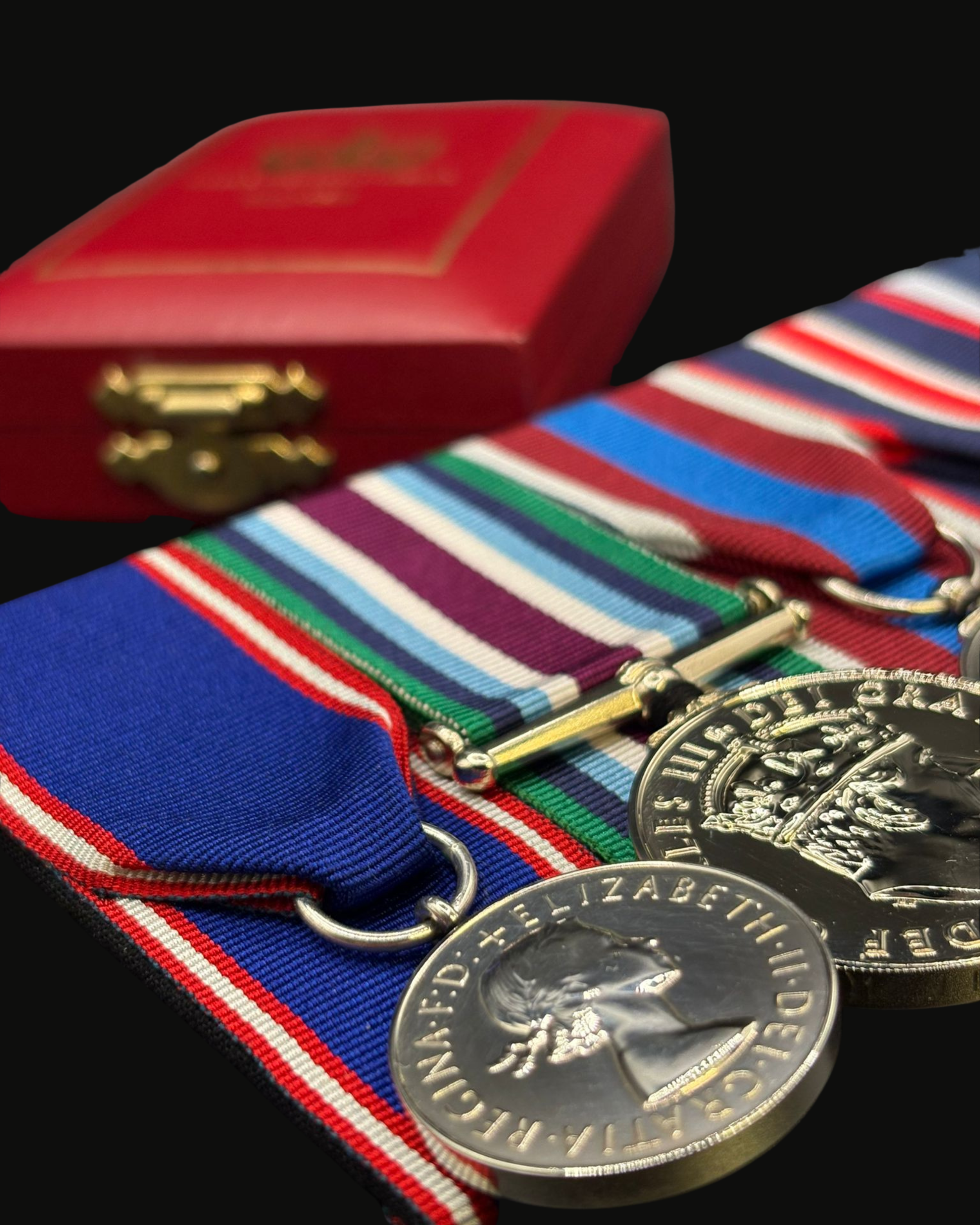
Why adding one medal means remounting them all
The first thing to understand is that a mounted medal group is constructed as one complete piece, rather than a collection of individual medals that can simply be added to whenever another award arrives. The ribbons, mounting brooch, backing and position of each medal are all arranged around the number of medals in the group, so introducing another one changes the whole construction.
There is also the order of precedence to consider. A newly awarded medal doesn't necessarily belong at the end of the group simply because it is the most recent one received. Medals must be worn in the correct order, and depending on the award, the new medal may need to sit somewhere between those already mounted.
Before we start any mounting work, we check the medals and their correct order of wear, because the last thing anybody wants is to arrive at a ceremonial occasion wearing a beautifully presented medal group that isn't actually arranged correctly.
What happens when we take a medal group apart?
When an existing group comes into the workshop for remounting, we carefully dismantle the original mounting, removing the medals from their ribbons and taking apart the backing and fittings. Sometimes this is relatively straightforward, but we also encounter groups that have been mounted using methods which make dismantling them considerably more difficult than it should be.
One of the things we regularly find is glue or double-sided tape used to hold ribbons and backing materials in place. This can leave adhesive residue on the ribbons and makes them impossible to reuse. At Tin Trousers, we don't use glue, tape or any other adhesives in our medal mounting. We use traditional sewing and mounting techniques to secure everything properly, which takes time and skill but means the finished group isn't relying on adhesives to hold it together. It also makes life rather easier for whoever has to dismantle the group when the next medal arrives, which may well be us!
Once the medals have been removed, we clean them using appropriate museum grade products. This is another area where I think it's important for customers to understand what is being done to their medals, because we have seen household cleaning products being used elsewhere and it is something we would absolutely never do.
Nor do we use Brasso, Silvo or other harsh metal polishes, which can damage a medal's finish and leave residues behind. Different medals have different materials and finishes, and cleaning them properly means understanding what you're working with rather than reaching for whatever happens to be in the cleaning cupboard.
With the medals cleaned and checked, we can begin rebuilding the group using new ribbons, backing and mounting materials. This also means that all the ribbons are consistent in colour and condition, rather than having one bright new ribbon sitting alongside several that may have faded over the years.
Court mounted or swing mounted?
The same principle applies whether your medals are court mounted or swing mounted, although the way the finished group is constructed is different. With court mounting, the medals are secured against a buckram backing, while swing mounted medals hang freely from their ribbons and are able to move.
In both cases, the position and spacing of the medals need to be considered as a complete group, with the finished mounting sitting correctly when worn on the uniform. There is more to choosing between court and swing mounting than many people realise, so we'll look at the differences in another Workshop Wisdom article rather than try to cover everything here.
Why does it cost so much to add just one medal?
I think this is probably the part that causes the most surprise, particularly when somebody has only recently paid to have their existing medals mounted and then receives another award.
From the outside, it looks as though we're charging to add a single medal to something that is already finished. In reality, we're taking the entire group apart and starting again, with new ribbons, backing, mounting materials and the work involved in positioning and securing every medal, not simply the newest one.
Naturally, a larger group takes longer to remount than a smaller one, and the cost reflects the materials and skilled labour involved. We would much rather explain that at the outset than have somebody wondering why what appeared to be a small job has turned into a much larger bill.
If you aren't sure what needs doing, bring your medals in and let us have a look. We can check the order of wear, explain the mounting options and tell you what the work will involve before you decide how to proceed.
A little planning makes life easier
At this time of year, with Trafalgar Night and Remembrance approaching, we see a considerable increase in medal mounting enquiries. Inevitably, some arrive with plenty of notice and others appear just a few days before an event.
We will always do what we can to help, but if you know another medal is on its way, it's worth getting in touch well before the next occasion you need to wear them. That gives us time to check the group, make sure everything is correct and carry out the work without the pressure of an approaching parade or dinner.
Medals are rather different from most of the other things we work on in the workshop. Each one represents something earned, often through years of service, and some of the older groups we see carry extraordinary personal and family histories. Whether we're mounting a single medal or rebuilding a group that has been added to throughout somebody's career, I think the same principle should apply.
The work behind the mounting may not be visible when the medals are worn, but that doesn't make it any less important.
Times may change. Standards must remain.
Erin Sutcliff
Director & Master Tailor, Tin Trousers