
How Do I Choose a Good Military Tailor?
By Erin Sutcliff, Director & Master Tailor, Tin Trousers
I've worked with military uniforms for more than 20 years, and one of the things I've learnt is that handing your uniform to a tailor requires a considerable amount of trust. It might be the uniform you wear every day, one you need for an important event, or something carrying rank, medals or insignia that need to be absolutely right.
So, if I were choosing someone to work on my own uniform, what would I look for? It wouldn't simply be the person who had been in business the longest, was closest to my base or gave me the cheapest quote. There are some much more useful things I would want to know first.
Do they have experience with your uniform?
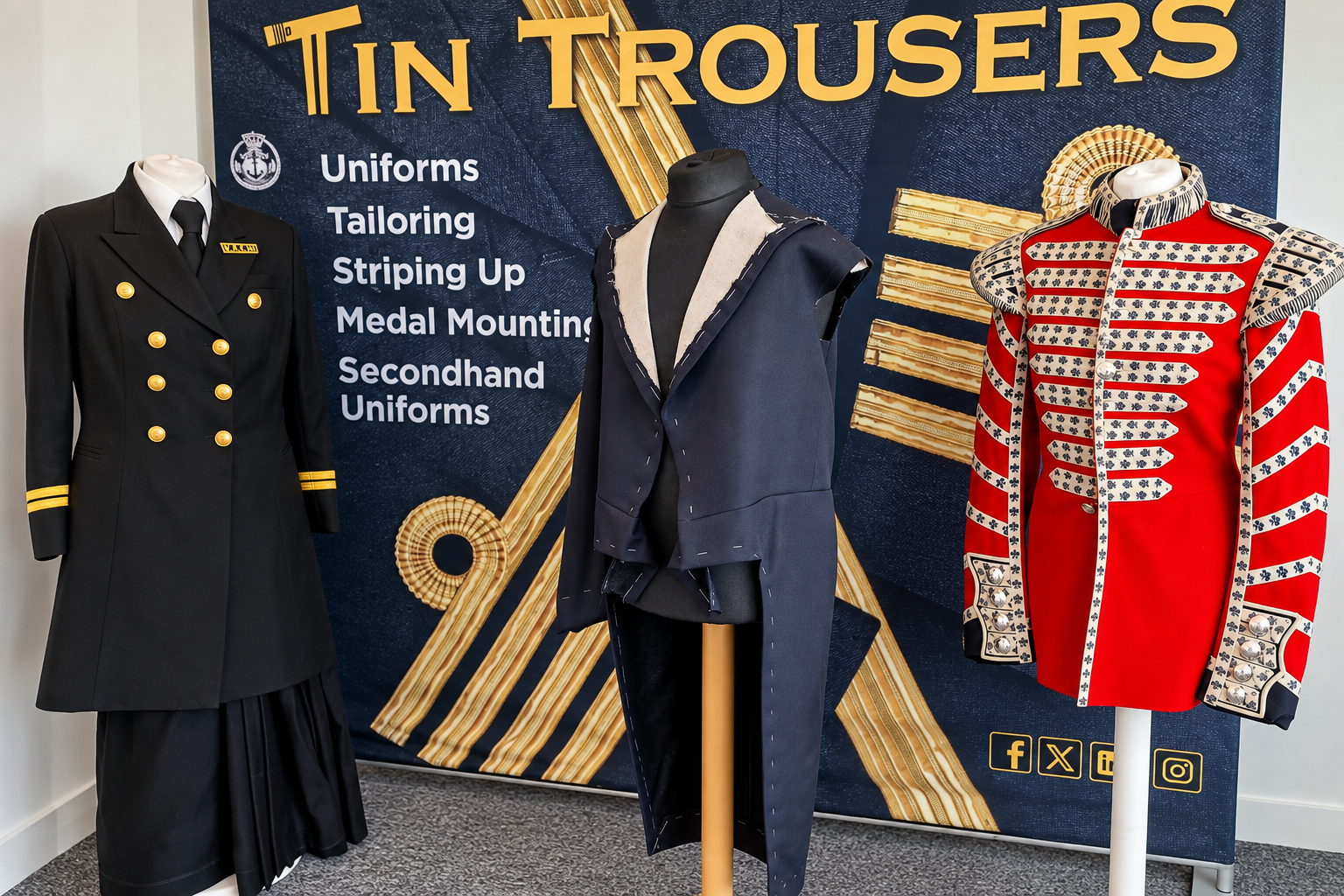
This would always be one of my first questions. Military tailoring isn't one single specialism, and experience with one service doesn't automatically mean someone fully understands the uniforms of another.
A good civilian tailor can absolutely undertake many military alterations. If your trousers need taking in or an unbraided part of a jacket needs adjusting, an experienced alterations tailor may be perfectly capable of doing it. Once the work involves rank, lace, braid, medals or more significant reconstruction, specialist experience becomes much more important.
I'd want to know that the person doing the work regularly handles that type of uniform, understands how it is constructed and has access to the correct materials, whether that's rank lace, braid, medal ribbons or badges.
Do they understand the regulations?
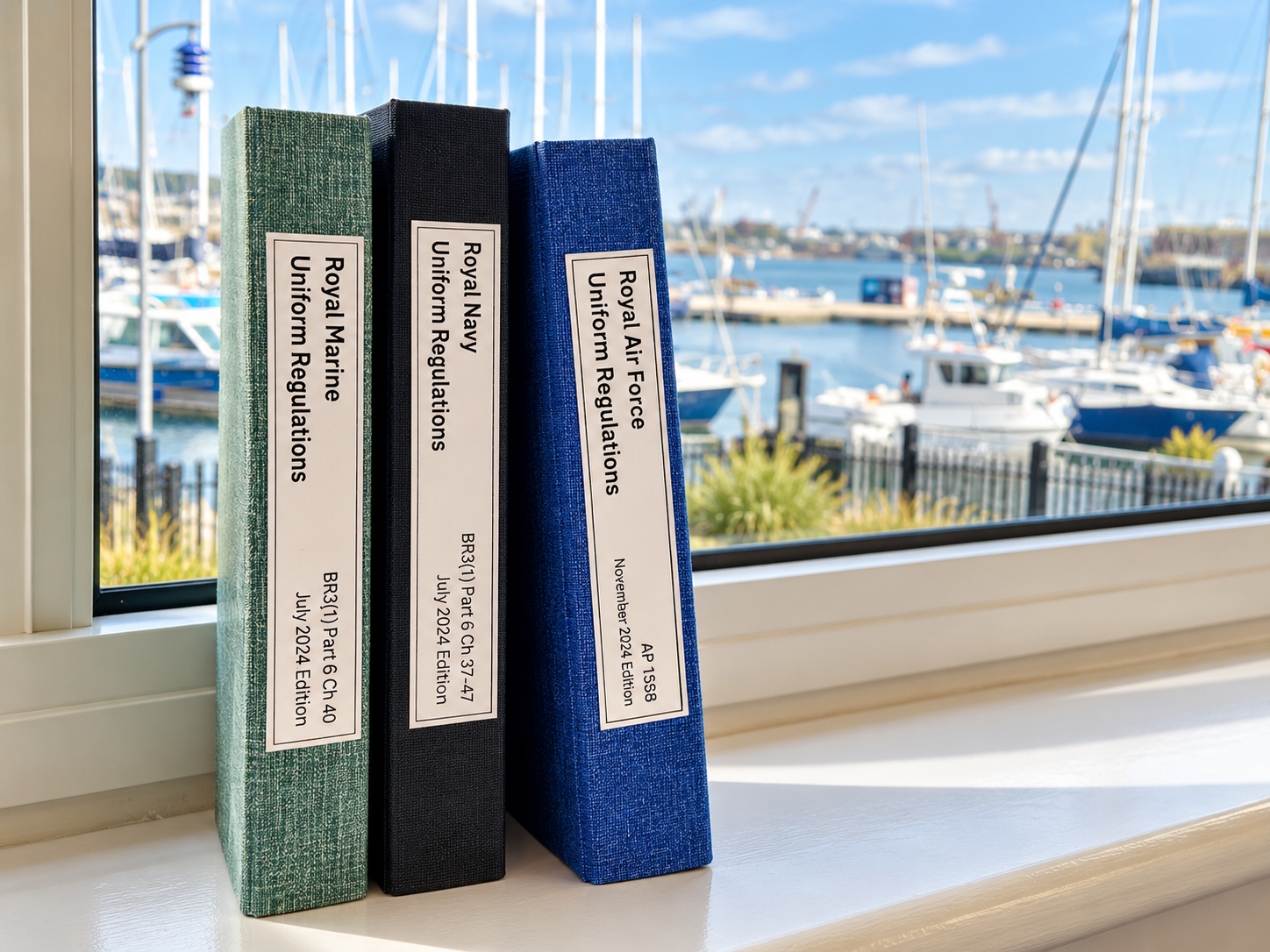
If I were using a military tailor, I wouldn't expect to have to teach them the everyday regulations relating to the work they undertake. If I was having common rank fitted, medals mounted or standard uniform alterations completed, I'd expect an experienced military tailor to understand what they were looking at.
That doesn't mean I would expect them to know every obscure regulation from memory. I certainly don't. There will always be unusual uniforms, uncommon appointments and wonderfully niche questions that require us to get the regulations off the shelf and check. In those situations, “I'm not sure, let me check” is a good answer.
For me, a specialist should know the everyday things and know where to find the answer to everything else.
What happens during the fitting?
I think you can learn a lot about a tailor during the fitting itself. A good fitting should involve more than looking at the particular area you've complained about.
If you tell me your sleeves are too long, for example, I don't just want to look at the bottom of your sleeves. I want to look at the balance of the jacket, how it is sitting on your shoulders and waist, and whether something elsewhere is contributing to the problem you're seeing.
I would expect the tailor to explain what they can see and what they propose to do about it. The uniform should be pinned or marked where necessary and the alterations discussed with you. You don't need to understand how to carry out the tailoring yourself, but I think you should leave with a good understanding of what is going to be done and why.
Do you feel comfortable with the person fitting you?
This is really important and perhaps isn't talked about enough. A proper fitting means your tailor will sometimes need to work quite closely around your body. That's a normal part of tailoring, but it doesn't mean you should ever feel uncomfortable with what is happening.
I would expect a tailor to explain what they are about to do and ask before taking measurements or working closely around more personal areas of the body. At Tin Trousers, for example, we would never take an inside leg measurement without explaining what we need to do and asking for clear permission first.
All of our tailors are DBS checked, but good practice goes beyond that. You should feel comfortable asking what your tailor is doing, saying that you are uncomfortable or asking them to stop. I would never want someone standing in one of our fitting rooms feeling that they simply had to put up with something because they thought it was part of having a uniform fitted.
What happens to your uniform when you leave?
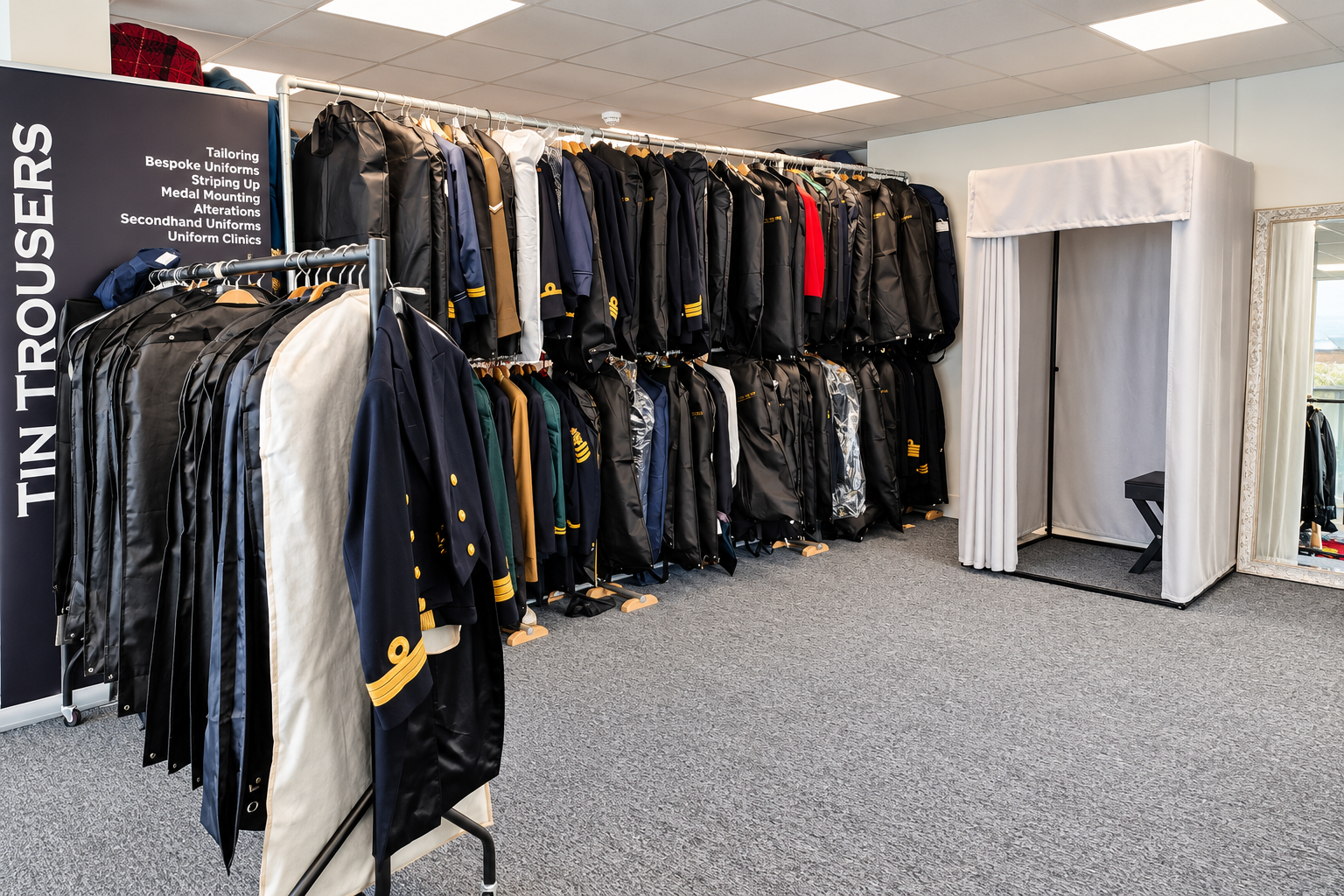
This is another thing I would look at before handing anything over. You may be leaving hundreds or even thousands of pounds' worth of uniform behind. Medals can also have a personal value that simply can't be replaced.
I'd look at the premises. Does the working environment appear clean and organised? Does it feel secure? Are garments clearly labelled? Is there a proper record of what you've handed over and the work you've agreed? For some customers and some types of work, I would also ask whether the people handling the uniform are security cleared.
I'd want to walk away confident that the business knows whose uniform it is, what needs to be done to it and where it is.
A few red flags
There is enough to say about red flags to fill another Workshop Wisdom, so I'll save most of that for another day. There are, however, three things that would make me ask more questions before leaving my own uniform behind.
Very cheap prices. Cheap doesn't automatically mean poor quality, and expensive doesn't guarantee good work. But skilled tailoring takes time. If one quotation was dramatically lower than everyone else's, I'd want to understand why.
Over-promising. Urgent work can sometimes be completed very quickly. We do it ourselves when we have the capacity. What would concern me is someone guaranteeing a difficult job in an unrealistic timeframe without properly assessing the work first.
No obvious process. If my uniform wasn't being clearly identified, the agreed work wasn't properly recorded or nobody could give me an idea of the likely cost, I would be reluctant to leave it behind.
The two questions that really matter
I don't think a good tailor should ever mind you asking questions. You're not expected to understand tailoring. That's our job. But you should feel confident that the person you're trusting with your uniform understands it, can explain what they are going to do and will be honest with you if something isn't possible or isn't the right solution.
And the right military tailor for you doesn't have to be Tin Trousers. If I were choosing someone to work on my own uniform, ultimately I'd want to be able to answer two questions before I walked out of the door:
Do they understand what they're doing?
And can I trust them to deliver what they've promised?