
By Erin Sutcliff, Director & Master Tailor, Tin Trousers
One of the most common requests we get in the workshop is from somebody who wants their trousers shortened. They've tried them on, decided they're too long and brought them to us expecting a fairly straightforward alteration. Except, quite often, the trousers aren't too long at all. The problem is that nobody has shown them how they're supposed to be worn.
This is particularly common with military uniforms, especially Mess Dress. Mess trousers are designed to sit high on the waist and be worn with braces, while No.1 trousers should sit at the waist rather than underneath the stomach. If they're worn too low, the crotch drops, the fabric gathers and the hems appear much longer than they actually are. Mess trousers are also designed to allow a little comfort around the waist, particularly when sitting down for a formal dinner. They shouldn't be so tight that they're uncomfortable after a meal, but equally they shouldn't be so loose that they gape at the waistband. The braces help keep everything sitting at the correct height.
Unfortunately, we're seeing uniforms being issued without anybody properly explaining how they should be worn. In some cases, trousers have even been shortened while sitting at the wrong height, leaving them too short when they're eventually worn correctly. It's frustrating because a perfectly good pair of trousers can end up needing further alterations, or even replacing, when a few minutes of explanation at the original fitting could have prevented the problem entirely. It's also a good example of why a professional tailoring fitting should involve considerably more than simply taking measurements.
When somebody comes to us for a fitting, the first thing we do is ask what they think is wrong with their garment and what they'd like us to change. Sometimes they know exactly what the problem is, but quite often they can only tell us that something doesn't feel right, or that the uniform doesn't look the way they think it should. Usually we'll ask them to put the garment on and explain that we're going to look at how it fits, work out what might be causing the problem and consider what we can do to achieve the result they're looking for. Occasionally, that means agreeing with the customer and carrying out precisely the alteration they requested. Other times, as with the trousers, we might discover that the solution is quite different. The important thing is that we explain what we're seeing and why we're recommending a particular approach. A fitting should be a conversation, not somebody making decisions about your clothing without involving you.
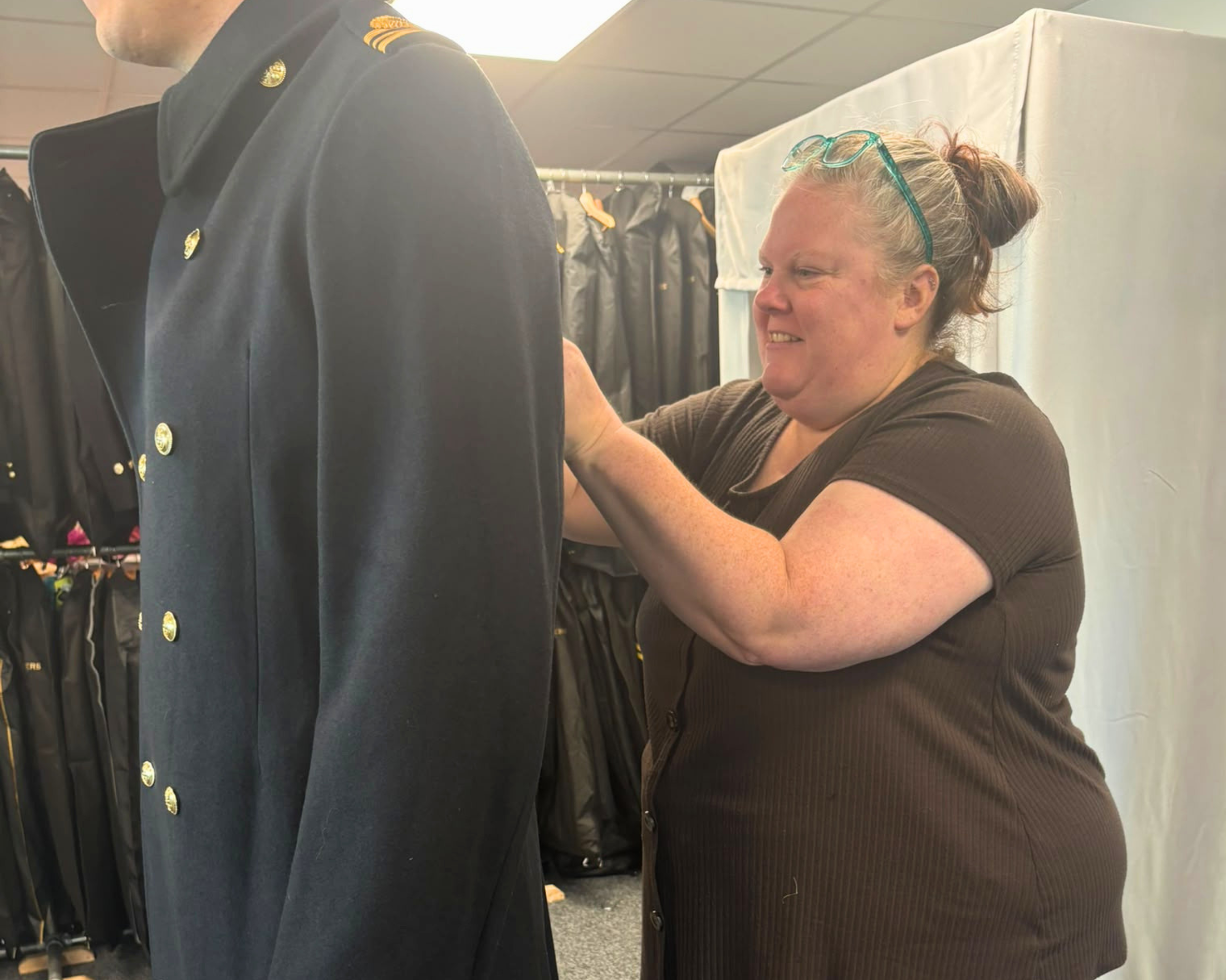
Something that isn't always appreciated is just how hands-on tailoring can be. To assess the fit of a garment properly, we may need to adjust fabric around the shoulders, chest, waist or hips, take measurements or pin material while the customer is wearing it. Depending on the alteration, this can mean working quite closely with somebody, sometimes in areas where they may understandably feel uncomfortable having a stranger working. At Tin Trousers, we always explain what we're going to do and ask permission before taking measurements or moving into someone's personal space. We talk customers through what we're seeing, what we think needs changing and whether we need to mark or pin anything. Customers should feel comfortable asking questions or saying if something doesn't feel right, and nobody should be left wondering why a tailor is touching a particular part of their clothing or what they're trying to achieve.
Our team are DBS checked, but professional conduct goes well beyond that. It's about treating people with respect, understanding personal boundaries and recognising that the person wearing the garment should always feel involved in the process. A good tailor should also be able to explain not only what can be altered, but what shouldn't be. Sometimes a garment simply needs to be worn correctly, sometimes the problem is caused by something other than the area the customer has identified, and occasionally an alteration might technically be possible but would compromise the appearance or construction of the garment. I'd much rather explain that to somebody before we begin than carry out work that doesn't actually solve their problem.
By the end of a fitting, you should understand what the tailor has identified, what they're proposing to do and what difference you can reasonably expect the alteration to make. You should also feel comfortable with the person doing the work and confident that they've listened to what you actually want, rather than simply doing what they think is best.
And if the answer is that your trousers don't need shortening after all, that's a perfectly good outcome too!
Times may change. Standards must remain.
Erin Sutcliff
Director & Master Tailor, Tin Trousers